

Brushing your teeth is about much more than a bright smile it protects you from cavities, gum disease, and bad breath. Many patients at Kaizen Dental, Noida ask, “Is it better to brush in the morning or at night?” The honest answer is that both times are important, but night brushing is usually more beneficial in the long run.
Under the guidance of Dr. Monika Kamboj (MDS), we teach that timing, technique, and consistency all work together to keep your mouth healthy. This guide explains morning vs night brushing teeth, why dentists are strict about brushing before bed, and how to set up a routine that really works.
Dental guidelines and research agree that brushing at least twice a day with fluoride toothpaste is the foundation of good oral hygiene.
Morning brushing helps remove overnight plaque and bacteria and tackles “morning breath”.
Night brushing clears away food, acids, and bacteria from the whole day and protects your teeth during sleep when saliva (your natural defence) is lowest.
If you brush only once, bacteria have many hours day and night to grow and produce acids that attack your enamel. That’s why dentists strongly recommend twice‑daily brushing, and sometimes three times a day for high‑risk patients.
At night, your body slows down saliva production. Saliva normally helps:
Wash away food particles and sugars
Neutralise acids
Control bacterial levels
When you sleep:
Less saliva means more bacterial growth
Leftover food and plaque mean higher acid attack
Over time this can lead to cavities, gum inflammation, and bad breath. Hence, if you ask, “What happens if I don't brush at night?”, the answer is simple: bacteria have 7–8 uninterrupted hours to damage your teeth and gums.
Brushing your teeth at night:
Removes food particles, sugars, and acids from all meals and snacks of the day
Reduces the risk of cavities and gum disease while you sleep
Helps prevent strong morning bad breath
Lets fluoride from toothpaste work longer on clean tooth surfaces
Many dental experts consider night‑time brushing slightly more critical than morning brushing because it protects your teeth during the most vulnerable hours.
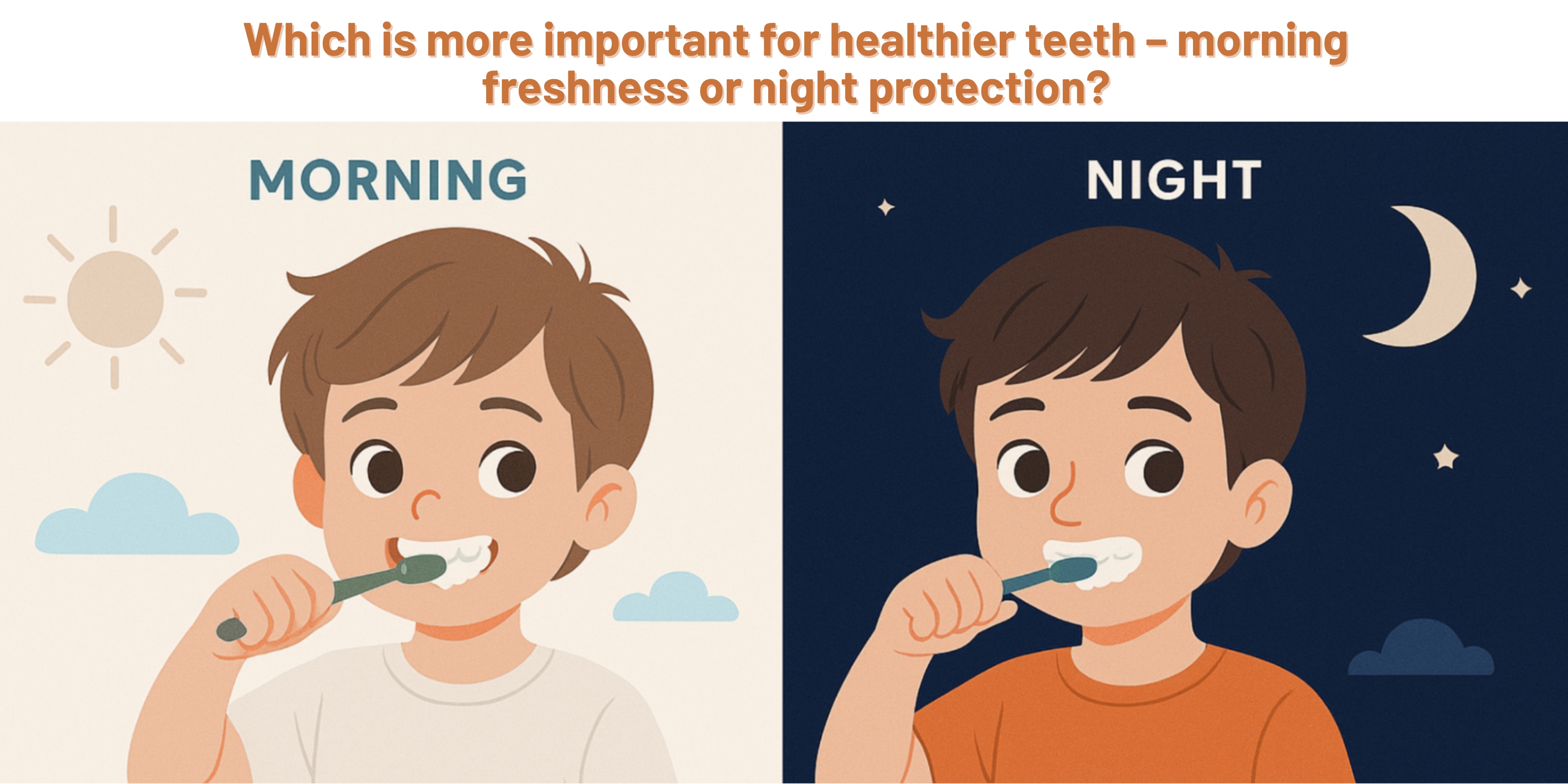
Night brushing is more important for preventing cavities.
Morning brushing is still essential for freshness and day‑time protection.
Technically you can, but it is not recommended if you want healthy teeth and gums.
Regularly skipping night brushing can:
Increase plaque build‑up and tartar formation
Raise your risk of cavities and bleeding gums
Worsen morning breath and sensitivity over time
Healthy teeth tips from dentists are clear: night brushing should be non‑negotiable, and morning brushing should be your second daily habit.
What Does Morning Brushing Do?
Brushing teeth in the morning:
Removes the bacterial film that built up overnight (the cause of “morning breath”)
Refreshes your mouth and boosts confidence before work, school, or meetings
Prepares your teeth for breakfast, tea, coffee, and other acidic or sugary foods
Stimulates saliva flow, which continues to protect your mouth through the day
Morning brushing:
Clears overnight plaque and bacteria that settled while you slept
Freshens breath so you feel confident talking to others
Coats teeth with fluoride, helping protect enamel from morning acids
Supports routine brushing soon after waking makes it easier to maintain the twice‑daily habit
Night brushing protects teeth while you sleep, and morning brushing helps you start the day with a clean, fresh mouth. Together, they form a complete daily defence.
Most dentists, including Dr. Monika Kamboj at Kaizen Dental, recommend:
Twice a day for most people (morning and night)
Three times a day or an extra mid‑day brush for patients with high cavity risk, braces, or frequent snacking (only if brushing gently to avoid abrasion)
The key is quality plus consistency. Brushing roughly five times a day with poor technique is less effective than brushing twice a day properly.
Brushing Technique and Duration
Even a perfect schedule fails if the technique is weak. For an effective routine:
Brush for at least two minutes each time
Use gentle circular motions instead of harsh scrubbing
Tilt the brush towards the gum line to clean where plaque hides
Clean outer, inner, and chewing surfaces of all teeth
Brush your tongue, where bacteria also build up
For complete oral health, brushing must be part of a broader routine:
Floss daily or use interdental brushes to clean between teeth
Consider an alcohol‑free mouthwash to reduce bacterial load if your dentist advises it
Limit frequent sugary or acidic snacks and drinks
Drink plenty of water, especially if you have a dry mouth
Visit your dentist regularly for check‑ups and professional cleaning
Even with perfect home care, professional cleaning removes hardened tartar that normal brushing cannot.
If you’re comparing morning vs night brushing teeth, remember:
Night brushing is crucial for long‑term cavity and gum disease prevention
Morning brushing is essential for freshness, plaque removal, and day‑time protection
Skipping either regularly can weaken your overall oral hygiene routine
If you must choose one, brushing at night is more protective but for best results, brush twice a day (morning and night) with fluoride toothpaste and good technique.
Stick to a twice‑daily brushing schedule morning and night
Never skip night brushing unless absolutely unavoidable
Use a soft‑bristled toothbrush and dentist‑recommended fluoride toothpaste
Avoid high‑sugar or sticky snacks, especially late at night
Schedule regular dental check‑ups and professional cleaning at Kaizen Dental in Noida
If you are brushing regularly but still noticing bleeding gums, sensitivity, or bad breath, it’s a sign to get a professional evaluation rather than brushing harder.
If you’re unsure about the best brushing routine for your lifestyle, or you want a personalised plan for stronger, healthier teeth, the team at Kaizen Dental, led by Dr. Monika Kamboj (MDS), is here to help. Our dentists regularly guide patients on:
Ideal morning and night brushing routines
Choosing the right brush, toothpaste, and mouthwash
Professional cleaning schedules and preventive treatments
Call Kaizen Dental today or book an appointment online to fine‑tune your brushing habits and protect your smile for the long term. A few small changes in your daily routine can make a big difference to your oral health.
1. Is it better to brush teeth in the morning or at night?
Night brushing is slightly more important because saliva drops while you sleep, so bacteria and acids stay on your teeth longer and can cause more damage. For best protection, dentists still recommend brushing twice a day—morning and night with fluoride toothpaste.
2. If I can brush only once a day, which time should I choose?
If you are in a phase where you brush only once, brushing at night before bed protects your teeth more than a single morning brush. This removes the full day’s plaque and food debris so acids cannot attack your teeth while you sleep.
3. Why does my breath smell in the morning even if I brush at night?
“Morning breath” happens because saliva flow is low during sleep, allowing bacteria to multiply on your tongue and teeth. Brushing at night plus brushing your tongue and drinking enough water helps, and a quick morning brush clears the overnight bacterial layer.
4. How many times a day should I brush my teeth?
Most dental associations advise brushing two times per day for at least two minutes each time, once in the morning and once at night with a soft‑bristled brush. Some high‑risk patients may brush a third time gently after meals, but over‑brushing or scrubbing too hard can damage enamel and gums.
5. Should I brush my teeth before or after breakfast?
Brushing before breakfast usually gives better enamel protection because it removes overnight bacteria and coats teeth with fluoride before they contact acids from food or tea/coffee. If you prefer brushing after breakfast, wait at least 30 minutes and rinse with water first to reduce acid attack.
6. Is it really bad to skip brushing at night sometimes?
Occasional misses happen, but making a habit of skipping night brushing allows plaque, sugars, and acids to sit on teeth for many hours, raising the risk of cavities and gum disease. At Kaizen Dental, we consider night brushing non‑negotiable, especially if you eat sweets or drink sugary beverages in the evening.
7. Do I still need mouthwash if I brush morning and night?
Mouthwash is an extra step, not a replacement for brushing and flossing. An alcohol‑free fluoride or antibacterial mouthwash can help certain patients, but the team at Kaizen Dental, Noida recommends it only when it suits your gums, cavity risk, and medical history.
8. What is the best brushing technique for morning vs night brushing teeth?
For both morning and night, use a soft‑bristled brush, hold it at a 45‑degree angle to the gum line, and use small circular motions over all tooth surfaces and the tongue for at least two minutes. Gentle, consistent brushing is more effective and safer than hard scrubbing, even if you brush less often